Explore Indonesia's extraordinary coffee diversity, from Gayo and Toraja to Java and Ijen. Discover how origin, processing, aroma, and brewing techniques shape every cup.
For some people, coffee is simply a drink to start the day. For specialty coffee enthusiasts, however, every cup tells a story about where the beans were grown, the coffee variety, the harvest, processing methods, roasting, and brewing techniques.
Indonesia is one of the most fascinating destinations to explore through coffee. Its vast archipelago, diverse landscapes, volcanic highlands, and agricultural traditions create an extraordinary range of coffee-growing environments.
From the highlands of Aceh to the mountains of Sulawesi and the plantations of Java, let's explore some Indonesian coffee origins worth discovering.
Why Is Indonesian Coffee So Diverse?
Indonesia's tropical climate and geographical diversity provide favorable conditions for coffee cultivation. Coffee is grown across Sumatra, Java, Sulawesi, Bali, the Lesser Sunda Islands, and Papua.
However, geography alone does not determine the flavor of a coffee. Several factors work together to shape the characteristics of every cup.
- Coffee variety: The genetic variety of the coffee plant.
- Altitude: The elevation where the coffee is grown.
- Climate: Weather and environmental conditions.
- Processing: How coffee cherries are handled after harvesting.
- Roasting: The roast level and roasting technique.
- Brewing: The method used to prepare the coffee.
This is why even coffees from the same region can taste surprisingly different.
Six Indonesian Coffee Origins Worth Exploring
1. Aceh Gayo – Coffee from the Highlands of Sumatra
Gayo coffee comes from the highlands of Aceh, particularly the areas around Takengon and Lake Laut Tawar. It is one of Indonesia's well-known Arabica coffee origins.
Gayo coffee is fascinating to explore through its aroma, acidity, body, and aftertaste. Processing methods such as washed, natural, and wet-hulled can produce different sensory experiences.
2. Toraja – Coffee from the Mountains of Sulawesi
Toraja, in South Sulawesi, is internationally recognized for its coffee-growing heritage. Toraja coffee is often associated with complex flavor profiles, although its actual characteristics depend on the variety, processing method, and roast.
For specialty coffee enthusiasts, Toraja is an interesting origin to compare with coffees from Sumatra and Java.
3. Java Coffee – A Legacy in Global Coffee History
Java Coffee has a special place in the history of international coffee trade. Its name became widely recognized during the colonial trading era of the 18th century.
Today, different regions of Java continue to produce coffee with diverse characteristics and processing traditions. It is a fascinating opportunity to connect the history of Java Coffee with the taste of modern Indonesian coffee.
4. Ijen – Coffee from East Java's Volcanic Highlands
The Ijen-Raung region is an important Arabica-producing area in East Java. Its mountainous environment, growing conditions, and processing practices offer another opportunity to explore the diversity of Indonesian coffee through cupping.
5. Temanggung – A Coffee-Growing Region in Central Java
Temanggung is one of Central Java's coffee-producing areas. Its coffee offers an interesting comparison with beans from other Indonesian regions, especially when exploring how varieties, processing, and roasting influence the final flavor.
6. Bali Kintamani – Coffee from the Island of Bali
Kintamani is one of Bali's recognized Arabica coffee-growing areas. Its highland landscape and local agricultural traditions give the region a distinctive identity.
Exploring Kintamani coffee is also an interesting way to understand the relationship between local farming environments and the specialty coffee world.
What Is Coffee Cupping and Why Does It Matter?
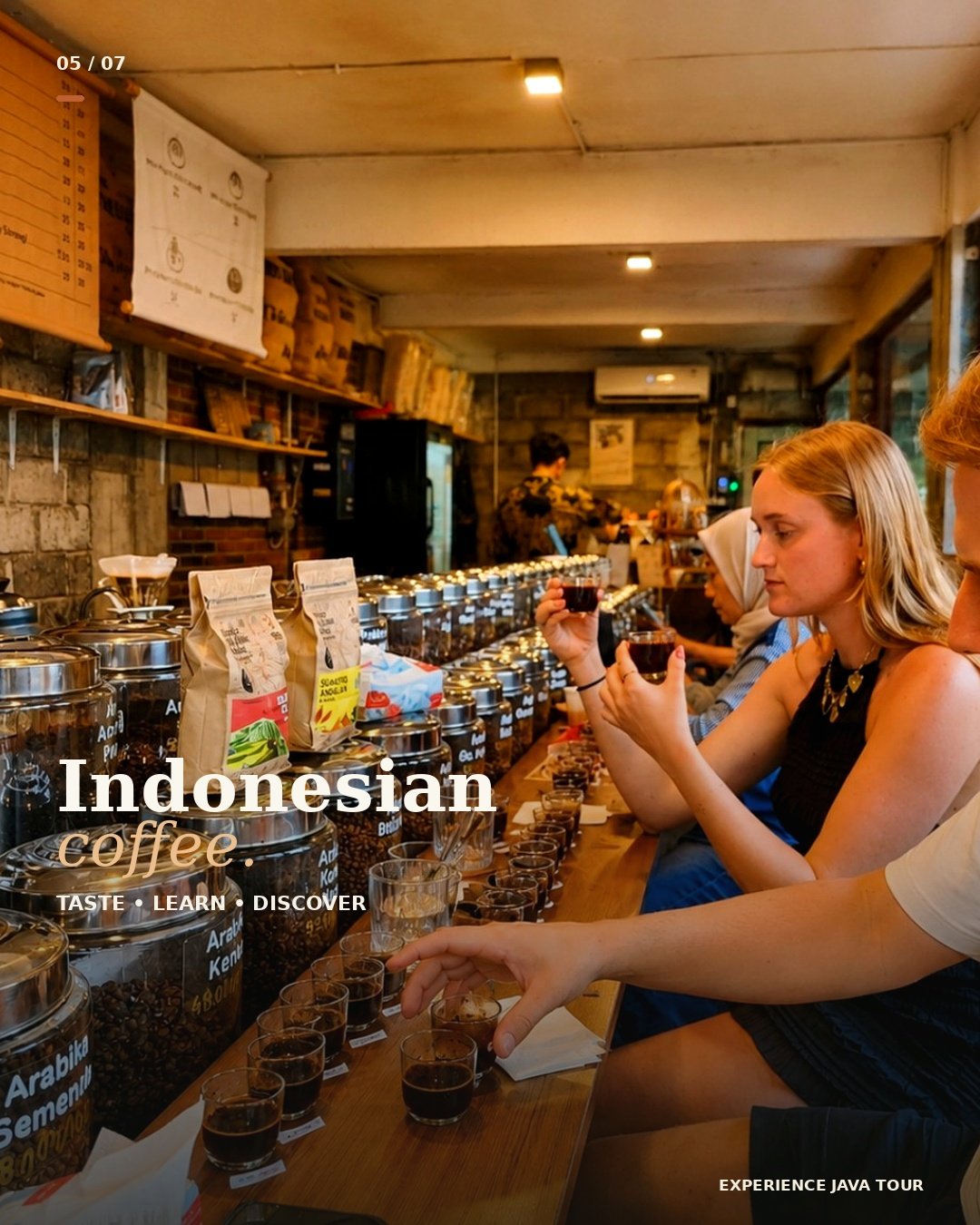
Coffee cupping is a structured way of tasting and evaluating coffee. Rather than immediately adding milk or sugar, participants explore coffee through several sensory characteristics.
- Fragrance: The aroma of dry ground coffee.
- Aroma: The smell released after hot water is added.
- Flavor: The overall taste experience.
- Acidity: The perceived brightness and quality of acidity.
- Body: The texture and weight of coffee in the mouth.
- Aftertaste: The flavors that remain after swallowing.
One fascinating detail is that coffee can taste different as it cools. A cup that initially seems intense may reveal more sweetness and subtle aromas at a lower temperature.
From Cupping to Brewing: Make Your Own Coffee
After discovering different origins, it is time to make your own coffee. Manual pour-over brewing allows you to explore how grind size, water temperature, coffee-to-water ratio, and pouring technique affect the final cup.
Discover Japanese-Style Iced Coffee
You can also discover Japanese-style iced coffee, a brewing method that combines hot extraction with ice to create a refreshing drink while retaining much of the coffee's aromatic character.
You do not need professional barista skills to enjoy the process. Curiosity and a willingness to experiment are enough.
Coffee Is More Than a Morning Ritual in Indonesia
In Indonesia, coffee is not exclusively associated with waking up or getting ready for work. It is also part of everyday social life.
People gather at traditional coffee stalls and modern cafés to discuss business, family, travel, football, or simply enjoy each other's company. Some conversations continue late into the night.
In Indonesia, coffee is not always about the caffeine. Sometimes, it is simply about having a reason to sit together and talk.
This social side of Indonesian coffee culture is something worth experiencing beyond the usual tourist attractions.
What About Indonesian Chocolate?
Indonesia is not only rich in coffee. The archipelago is also home to different cacao-growing regions and chocolate producers.
Chocolate products available in Indonesia come from regions including Bali, Lampung, West Java, Aceh, and beyond. Different products can reveal different aromas, flavors, textures, and levels of intensity.
Exploring coffee and chocolate together offers a fascinating perspective on Indonesia's tropical agricultural heritage.
Experience Indonesian Coffee and Chocolate in Yogyakarta
Experience Java Tour invites you to explore Indonesia's coffee diversity through the Yogyakarta Coffee & Chocolate Brew Experience.
During this workshop with a local barista at Kedai Kopi Kulon, you can taste different Indonesian coffee origins, compare aromas and flavors through cupping, and prepare your own manual brew using your selected coffee.
The experience also introduces Indonesian chocolate from different regions, including Bali, Lampung, West Java, and Aceh.
Choose your preferred coffee or chocolate tasting and brewing experience, then take home two 50-gram souvenir selections.
Discover Indonesia one cup at a time.
Book Your Indonesian Coffee & Chocolate Experience
Ready to explore Indonesia's coffee and chocolate diversity firsthand? Join Experience Java Tour and discover the stories behind every bean you taste.
Visit Experience Java Tour or contact our team via WhatsApp for information and reservations.
WhatsApp: +62 812 2804 6928
We look forward to welcoming you to Yogyakarta!